 Back
Back
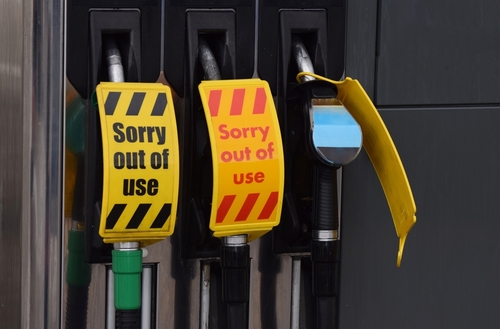
West Australian fuel supplies, especially diesel, are experiencing supply and distribution challenges with some regional members reporting supply issues. Conflict in the Middle East has impacted global fuel infrastructure and supply chains, raising shipping, insurance and freight costs. The situation presents a variety of risks that members should consider and make decisions for the future.
Members should treat fuel supply and cost volatility as a current operational and continuity risk: prioritising fuel for life‑safety and critical infrastructure functions, planning for workforce impacts, and preparing communications to manage community expectation and reputational exposure.
Current member challenges
We have been advised by some members that they are currently experiencing operational and business continuity challenges as follows:
- Challenges delivering critical local government services
- Plant and equipment siphoned at depots and worksites overnight.
- Worker's availability and potentially increased absenteeism.
- Bulk fuel storage being targeted and stolen.
- Contractor availability impacted and jobs stalled.
- Frontline staff absorbing abusive community behaviour.
- Workers worried about job security if this continues.
Is this a business continuity event?
Your business continuity plan (BCP) will determine what constitutes a BCP event for your local government. Depending on the severity of the issue and challenges your local government faces it may already be a BCP event, a significant challenge and disruption, or an issue that may evolve to impact business continuity.
If your criteria for a BCP are met, your plan should set out your responsibilities and obligations to consider risk and potentially scale back operations to protect your capacity for the long haul.
BCP and LEMA — two tools, working together
BCP and Local Emergency Management Arrangements (LEMA) work together not separately. Your BCP manages your operations. Your LEMA framework applies to the community impact — energy supply or liquid fuels disruption is a listed hazard for many members. Depending on the situation for your local government and region it may be appropriate to brief your Local Emergency Management Committee (LEMC) – this could be out-of-session.
Triage your work — ask
- Is this a critical service or operation? If YES, make it a priority.
- Is this safety-critical? If YES, it must happen. Plan for it.
- Does the work have to be done now? Can the delivery date be moved? Talk to internal and external stakeholders and explore flexibility or postpone the task.
- How much fuel does this take — and is there a lower-fuel (or no fuel) way to get it done?
Five risk areas to keep an eye on
- Business continuity and operational: Identify critical services to prioritise and tasks that could be deferred. Document every decision and is rationale. A risk lens must be passed over the decision. Engage with stakeholders such as funding bodies, contractors and employees early.
- Your people and safety: Review risk assessments with workers for any changed methods or substituted tools. Don't let pressure to catch up lead to shortcuts. It's important to ensure that all workers (contractors or employees) have sufficient ability, training and tools to do tasks in a safe manner.
- Psychosocial: If you have an EAP service remind staff. Also share publicly available resources such as the WA Financial Counselling Helpline (1800 007 007). Check in on frontline workers — they may be experiencing increased work pressure and community focus.
- Financial: Contact grant funding bodies proactively if delivery is at risk. Watch for workers' compensation exposure from fatigued or distracted workers.
- Reputation and community: Communicate early and honestly about reduced services. Don't leave frontline staff to absorb community frustration without support.
Read the full guidance note and supporting checklists for more practical advice to manage the risk of fuel shortages.
Downloads
Please make sure that you're logged in before clicking on the links below.
The following templates can be downloaded. Please make sure that you make changes to reflect the unique experiences and concerns for your local government.
- BCP Summary: scenario, fuel shortage (pdf)
- Indoor team checklist (pdf)
- CEO and management checklist (pdf)
- Management of plant assessment and alternative site assessment (pdf)
- Outdoor team checklist (pdf)
- Sample risk register - fuel shortage (pdf)
Government information
Both the West Australian and Federal Government's are working to secure fuel supply. They provide regular updates and members should continue to monitor their sites as follows:
- National Fuel Security Action Plan
- Western Australia's Fuel Security
- Subscribe to WALGA's LG Direct for regular sector information
More information and support
For questions and support please contact your account manager or regional risk specialist.